

About IBR
Explore the heart of our mission and join us in shaping a better world.
Advancing Human Affairs through Behavioral Science
Our Mission:
To enhance the growth of the behavioral sciences and their application to human affairs through our dedicated initiatives in:Research
Advancing behavioral science through innovative research and applied solutions.
Clinical Services
Delivering tailored interventions to improve individual and community health outcomes.
Consulting and Education
Fostering expertise in behavioral science with targeted consulting and comprehensive educational initiatives.
We invite you to explore our diverse programs, enjoy the various resources we have to offer, and learn more about IBR and the people who make it all happen.




Our Legacy of Innovation in Behavioral Science
Ever onward and upward! For Dr. Joseph V. Brady, IBR’s founder, these simple, straightforward words were more than a lifelong motto as they also energized his search for new ways to apply his personal dedication and behavioral science advancements to improve life on Earth and beyond.
Mission and Growth
An Introduction to IBR’s
Impact and Expertise
Service Expansion for Enhanced Benefits
Today, Dr. Brady’s dream realization means expanding IBR’s service and research facilities so that the people we serve can fully realize the benefits associated with scientific advances in treatment and behavior management.
Holistic Care in Substance Use Disorders
This dedication has manifested itself in many ways and with many projects, including REACH Health Services, a multi-faceted substance use disorders treatment program, which provides holistic care that integrates cutting-edge treatment with a deep understanding of each individual’s unique experiences.
Leading Expertise in Fatigue Management
Following the hire of Dr. Steve Hursh in 2005, IBR emerged as a leading expert in fatigue risk management (FRM) consulting through the sale of its SAFTE-FAST software, which leverages Dr. Hursh’s invention of the Sleep, Activity, Fatigue, and Task Effectiveness (SAFTE) model in conjunction with FAST (Fatigue Avoidance Scheduling Tool) to support more than 100 companies and institutions, including global airlines, railroad operators, and military and governmental agencies.
A New Dimension in Behavioral Economics
Dr. Hursh also brings more than 40 years of pioneering expertise in behavioral economics. Not to be confused with the more recently popularized sub-field of economics that applies psychological principles to understand human economic decision-making, behavioral economics, as developed by Dr. Hursh, is a subfield of Psychology itself, defined as the application of microeconomic principles and techniques to describe and understand individual and group behavior. IBR’s work in behavioral economics can have widespread policy implications in a broad array of public health areas.
Explore Our Core Initiatives
Operational Fatigue & Performance
Strategic solutions to manage and mitigate fatigue risk.
REACH Health Services
Holistic recovery programs tailored for individual needs.
Behavioral Economics
Applying economic principles to understand human behavior.
Meet the Minds Behind Our Mission

President and Chief Behavioral Scientist
Derek D. Reed, PhD, BCBA-D
President and Chief Behavioral Scientist
Dr. Derek Reed is President and Chief Behavioral Scientist of the Institutes for Behavior Resources, where he brings over two decades of progressive leadership and scientific achievement spanning academia, research administration, and applied behavioral sciences. He previously held key leadership roles as Professor and Director of Graduate Studies at the University of Kansas, where he led research teams, chaired graduate committees, and oversaw personnel and program development. Dr. Reed has also served as Assistant Director of Clinical Services at Melmark New England, member of the University of Kansas Senate Faculty Research Committee, Coordinator of the Association for Behavior Analysis International Science Board, Member-at-Large for Division 25 (Behavior Analysis) of the American Psychological Association, and as Senior Consortium Research Fellow with the U.S. Army Research Institute. His governance and policy experience includes serving as Executive Director of the Society for the Quantitative Analyses of Behavior, Secretary of the Society for the Experimental Analysis of Behavior, Trustee for the Cambridge Center for Behavioral Studies, and Trustee for Boys Town (Father Flanagan’s Boys’ Home).
A prolific and internationally recognized behavioral scientist with more than 300 publications (including a leading textbook in behavioral science and four edited handbooks) and multiple senior editorial positions across leading journals (previous Associate Editor for Journal of the Experimental Analysis of Behavior, Journal of Applied Behavior Analysis, Behavior Analysis in Practice, and The Psychological Record), Dr. Reed has been honored with numerous mentoring, leadership, and translational research awards, reflecting his ability to integrate scientific rigor with collaborative, data-driven organizational leadership. These awards include the American Psychological Association Division 25 B. F. Skinner Foundation New Applied Researcher Award, the Society for the Experimental Analysis of Behavior Don Hake Award for Translational Research, and the Federation of Associations in Behavioral and Brain Sciences Early Career Award. His work has been funded by the Food & Drug Administration, National Science Foundation, Department of Defense, National Institutes of Health, and Advanced Research Projects Agency—Energy. He is also named among the top 10 most productive behavioral economists globally (IJEFI, 2024).

Chief Operating Officer/Executive Vice President
Reid Blank, MBA
Chief Operating Officer/Executive Vice President
Reid Blank is Chief Operating Officer/Executive Vice President at the Institutes for Behavior Resources (IBR), where he directs and coordinates IBR’s marketing, communications, contract management, Board of Trustees activities, facilities management and organizational development initiatives. He earned his M.B.A. in International Business Management from the Thunderbird School of Global Management in Glendale, AZ.
Reid has more than 35 years of business development and administrative operations experience in sleep and fatigue management. Prior to joining IBR, he was founder of The Big Sleep Show®, the first-ever consumer health event for sleep and alertness, served as Vice President of Alertness Solutions, a private fatigue management consulting firm, and was Associate Executive Director of the nonprofit National Sleep Foundation.

Executive Director, REACH Health Services
Gabby Knighton
Executive Director, REACH Health Services
Gabby Knighton is the Executive Director of REACH Health Services addiction treatment program at the Institutes for Behavior Resources (IBR), where she oversees strategic development, daily operations, clinical quality, and fiscal management.
Gabby joined REACH in 2026, succeeding Vickie Walters, who led the organization for 17 years. She continues to advance REACH’s commitment to client-centered care, community service, clinical excellence, and innovative partnerships, with a focus on progressive, evidence-based treatment approaches and research integration.
Prior to joining REACH, Gabby held leadership roles at People Encouraging People and Behavioral Health System Baltimore, where she led programs and developed innovative grant initiatives addressing behavioral health, integrated care, supportive housing, and other social determinants of health.

Chief Sleep Scientist
Jaime K. Devine, PhD
Chief Sleep Scientist
Jaime K. Devine, PhD, is Chief Sleep Scientist at IBR with over 15 years of experience in behavioral neuroscience and sleep research. Dr. Devine holds a PhD in Neuroscience from Brandeis University and Certificates in Sleep Medicine and Biostatistics from Harvard Medical School as a member of the Human Sleep and Inflammatory Systems Laboratory investigating the interaction between sleep, fatigue, and pain.
Prior to joining IBR, she was an experimental health stress scientist at the Walter Reed Army Institute of Research Sleep Research Center and Operation Research Team.
Dr. Devine is a subject matter expert in sleep behavior in operational populations and the use of wearable technologies for scientific data collection.

Organizational Behavior Scientist
Matthew Laske, PhD
Organizational Behavior Scientist
Dr. Matthew Laske is an Organizational Behavior Scientist at the Institutes for Behavior Resources, Inc., where he applies behavioral science to organizational performance, occupational safety, leadership, and communication. Dr. Laske earned his Ph.D. in Behavioral Psychology from the University of Kansas and his M.A. in Industrial-Organizational Psychology and Human Resource Management — with a Graduate Certificate in Data Analytics — from Appalachian State University.
Prior to joining IBR, Dr. Laske served as an Assistant Professor and Director of the Organization and Communication Sciences Laboratory in the Department of Behavior Analysis at the University of North Texas. He also worked as a Behavioral Safety and Data Specialist at Eastman Chemical Company, where he helped design and implement organizational processes that significantly reduced workplace injuries.
He co-authored the book, The Science and Best Practices of Behavioral Safety and has published numerous articles and chapters on topics including occupational safety, organizational change, organizational behavior management, behavior-based training, and public speaking and scientific dissemination. His contributions to organizational outcomes have been widely recognized: he was named a 2025 Rising Star of Safety by the National Safety Council and received the inaugural Aubrey Daniels Outstanding Applied Intervention Award from the OBM Network.
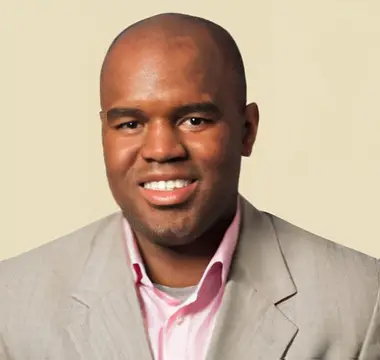
Medical Director, REACH Health Services
G. Malik Burnett, MD, MBA, MPH
Medical Director, REACH Health Services
As a physician, entrepreneur, and drug policy expert, Dr. Malik Burnett works to advance the broader drug policy reform agenda with the goal of shifting US drug policy from a framework based on criminal justice to one based on public health.
In addition to his role as Medical Director of REACH Health Services, he currently serves as the Medical Director for the Maryland Department of Health’s Center for Harm Reduction Services, an Assistant Professor in Addiction Medicine at the University of Maryland Midtown Campus and as a consultant for the Maryland Addiction Consultation Service. Additionally, he serves on the American Society of Addiction Medicine Public Policy and Legislative Advocacy Committees.
He attended Duke University where he completed his undergraduate, medical school and business school. He earned his MPH from Johns Hopkins Bloomberg School of Public Health and completed his residency training in general preventive medicine at Johns Hopkins Hospital and his addiction medicine fellowship at the University of Maryland Medical Center.

Chief Financial Officer
Roshni Patel, CPA
Chief Financial Officer
Ms. Roshni Patel has been IBR’s Chief Financial Officer since 2006 and has more than 20 years of experience in corporate accounting.
Ms. Patel is responsible for all financial reporting and analysis, annual audit preparation, non-profit financial administration, and oversight of financial accounting for all IBR programs and services.
Roshni is a licensed Certified Public Accountant and a graduate of the University of Texas with a B.A. in Business Administration in Accounting.

Director of Human Resources
Sharon Taylor, PHR, SHRM-CP
Director of Human Resources
Sharon Taylor serves as Director of Human Resources at the Institutes for Behavior Resources, Inc., bringing over 20 years of HR experience to her role.
With a collaborative and people-centered approach, Sharon partners closely with supervisors to strengthen teams, interpret policy, and promote a workplace culture grounded in equity, engagement, and professional growth. She is deeply committed to creating an environment where employees—and the communities they serve—can thrive.
Prior to joining IBR, Sharon spent over a decade as an HR Generalist at The Maryland School for the Blind, where she supported full-cycle recruitment, compliance, and staff development initiatives. Earlier in her career, she held multiple human resources roles with Aramark Sports & Entertainment, as well as positions in recruiting and personnel administration, building a strong foundation in workforce management and employee engagement.
She is PHR and SHRM-CP certified, and holds a Bachelors in Human Resources Management from Messiah College.

Senior Manager, Data Science & IT Operations
Jake Choynowski
Senior Manager, Data Science & IT Operations
Jake Choynowski is the Senior Manager of Data Science & IT Operations at IBR, where he brings together data science, research operations, and applied data systems to advance the study of sleep, fatigue, and human performance.
Before joining IBR in 2020, Jake spent five years at the Walter Reed Army Institute of Research, supporting field studies with military populations throughout deployment and training cycles. He also coordinated DoD-funded investigative research on biomarkers for traumatic brain injury at Johns Hopkins Medicine.
Jake’s work focuses on fatigue, predictive modeling, and applied research with military, aviation, maritime, healthcare, shift worker, and first responder populations. He created research-focused R packages including WORK-A and SAFTEr, and supports IBR’s technology operations through systems planning, data governance, and coordination between research and operational needs.

Strategic Advisor
Steven R. Hursh, Ph.D.
Strategic Advisor
Dr. Steve Hursh is Strategic Advisor for Institutes for Behavior Resources (IBR), where he previously served as President and Chief Scientist. In his role, he provides advisory and guidance on research and application efforts related to human performance and fatigue, behavioral economics, drug abuse, and cooperative team performance. He is also Adjunct Professor of Behavioral Biology in the Department of Psychiatry and Behavioral Sciences at the Johns Hopkins University School of Medicine.
Dr. Hursh’s leadership of IBR builds on a distinguished career both as a behavioral researcher and research manager, including:
- 23 years of experience as a scientist in the US Army;
- Serving as the consultant to the Army Surgeon General for Research Psychology;
- Director of the Division of Neuropsychiatry at the Walter Reed Army Institute of Research;
- Medical staff officer in the Pentagon, Office of the Assistant Secretary of the Army (Research, Development, and Acquisition)
- Ten years as Program Manager for Biomedical Modeling and Analysis, SAIC;
- Twenty years as President and Chief Scientist of IBR.
Dr. Hursh is a world leader in theory and modeling in the Behavioral Economics subfield of Psychology as defined by the application of economic concepts and metrics to individual and group behavior. He was also named among the top 10 most productive behavioral economists globally (IJEFI, 2024).
In addition, Dr. Hursh serves as a technical advisor on an effort to model the relationship between sleep deprivation and performance. His patented biomathematical model–the Sleep, Activity, Fatigue, and Task Effectiveness or SAFTE™ model–has been accepted by the US Department of Defense as the standard warfighter fatigue model, has been validated and calibrated by the Department of Transportation as a fatigue risk management tool, and is currently used by the Federal Railroad Administration, the Federal Aviation Administration, and the Federal Motor Carrier Safety Administration to assess fatigue in transportation operations.
He is also the co-inventor of the FAST™ (Fatigue Avoidance Scheduling Tool) and SAFTE-FAST computer programs used by government agencies and various industries to assess and manage fatigue in operational settings.
Dr. Hursh earned his B.A. in Psychology from Wake Forest University and Ph.D. in Experimental Psychology from the University of California, San Diego.
Over his 50 years in research, Steve has authored or co-authored over 180 published articles, book chapters, and technical reports, and served as associate editor of the Journal of the Experimental Analysis of Behavior.
Anika Alvanzo, MD, MS, FACP, DFASAM
Board Member
IBR Board of Trustees
Physician Principal
Health Mgmt. Assoc./Uzima Consulting Grp LLC
Eric A. Blanchard, JD
Treasurer
IBR Board of Trustees
Retired General Counsel of Uline, Inc.
Paul D. Bliese, Ph.D.
Vice-President
IBR Board of Trustees
Jeff B. Bates Chaired Professor
Kathleen Brady, M.D., Ph.D.
Board Member
IBR Board of Trustees
Distinguished University Professor
Nicole Gravina, Ph.D.
Board Member
IBR Board of Trustees
Assoc. Professor, Dept. of Psychology
University of Florida
Jack E. Henningfield, Ph.D.
Vice-President
IBR Board of Trustees
Vice President, Research & Health Policy
Robert Hienz, Ph.D.
Secretary
IBR Board of Trustees
Stephen T. Higgins, Ph.D.
Board Member
IBR Board of Trustees
Director, Vermont Ctr. for Behavior & Health
University Distinguished Professor
Pamela M. Kessler, Esq
Board Member
IBR Board of Trustees
Professor of Criminal Justice Studies
Michael J. Lewis, Ph.D.
Chairman
IBR Board of Trustees
Professor, Department of Psychology
Thomas G. Raslear, Ph.D.
Board Member
IBR Board of Trustees
Retired Chief, Human Factors Research Division
Derek D. Reed, Ph.D., BCBA-D
President
IBR Board of Trustees
President and Chief Behavioral Scientist
Institutes for Behavior Resources, Inc.
Louis Shomette, IOM
Board Member
IBR Board of Trustees
Former Executive Director & CEO
Dace S. Svikis, Ph.D.
Board Member
IBR Board of Trustees
Deputy Dir., Institute for Women's Health
Professor, Dept of Psychology
Virginia Commonwealth University